
Nothing feels worse than slipping into a brand-new pair of shoes only to realize they’re too tight. Whether it’s leather boots, canvas sneakers, or dress shoes, stiff or snug footwear can leave you with blisters and sore feet.
The good news? You don’t have to suffer—or toss your shoes to the back of the closet. With a few simple tricks, you can stretch out shoes at home quickly and make them far more comfortable.
This guide shares proven step-by-step tutorials to safely stretch different shoe materials without expensive tools.
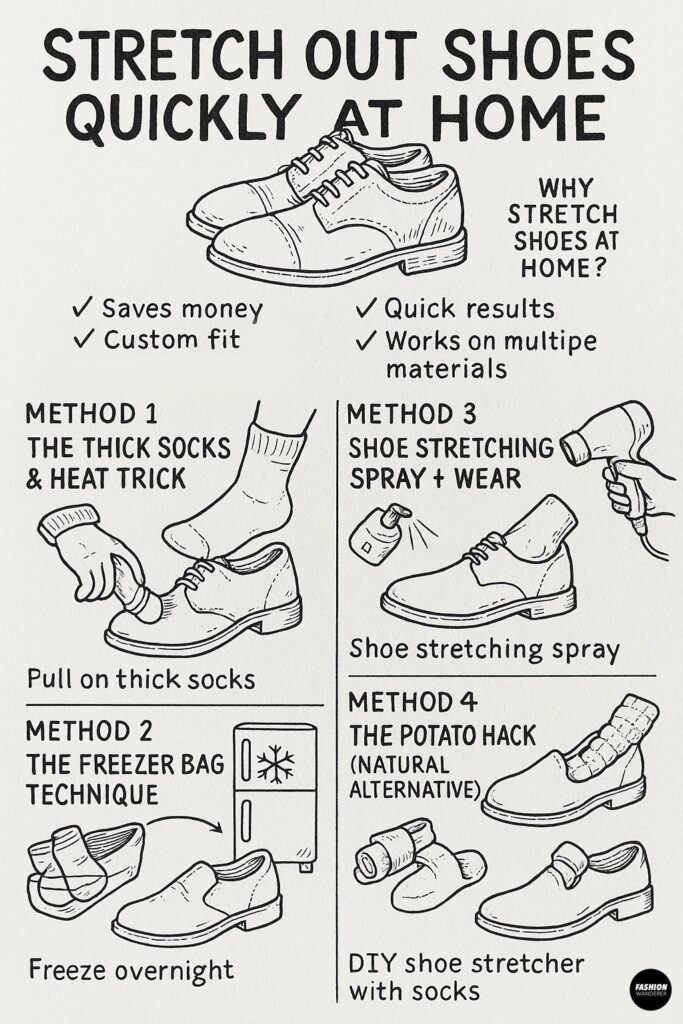
Why Stretch Shoes at Home?
- Saves money: No need for a cobbler or shoe stretcher.
- Quick results: Many methods show results in just a few hours.
- Custom fit: Target problem areas like toe boxes or tight heels.
- Works on multiple materials: Leather, suede, fabric, and even synthetic shoes can be stretched.
Method 1: The Thick Socks & Heat Trick
This classic method works wonders for leather and synthetic shoes.
What You’ll Need:
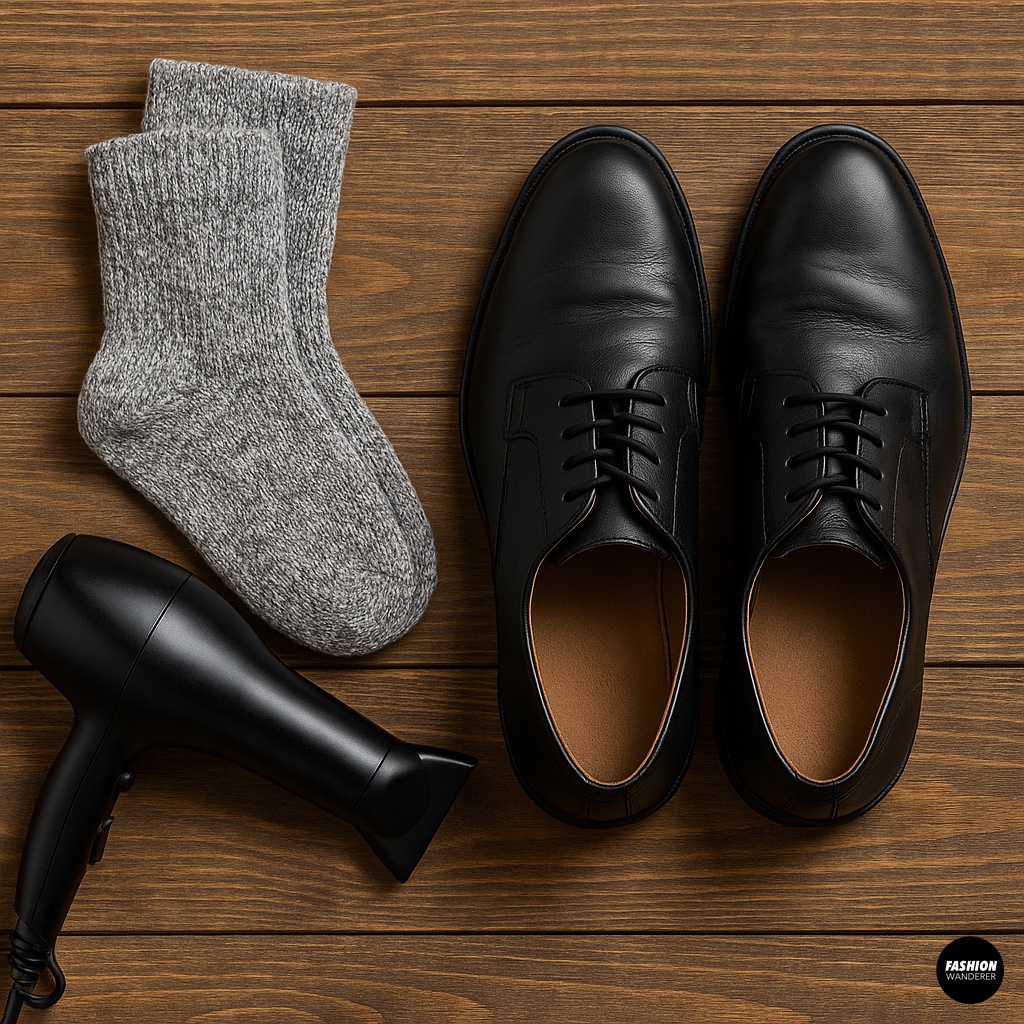
- Thick socks (or two pairs of regular socks)
- Hairdryer
- Tight shoes
Step-by-Step Tutorial:
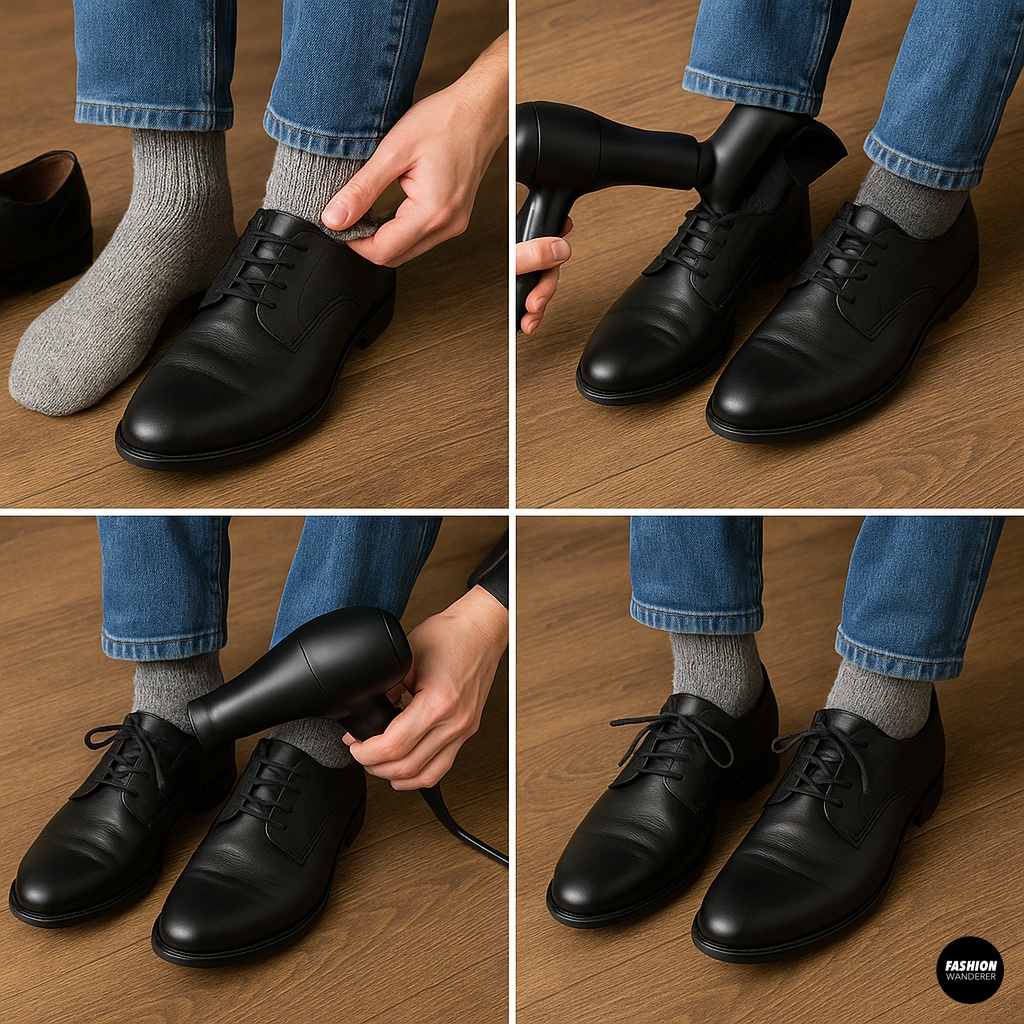
- Put on thick socks: Slip into the bulkiest pair you have, or double up.
- Wear your shoes: Force your feet in, even if they feel snug.
- Apply heat: Using a hairdryer on medium, blow hot air over the tight areas for about 30 seconds. Keep moving the dryer to avoid damaging the material.
- Flex your feet: Wiggle your toes, walk around, and bend your feet while heating. This helps the material relax and mold to your foot shape.
- Cool down: Keep the shoes on until they cool. Remove the socks and try again with bare feet.
Results: Noticeably looser fit after just one session.
Method 2: The Freezer Bag Technique
Perfect for non-leather shoes, especially canvas sneakers or flats.
What You’ll Need:
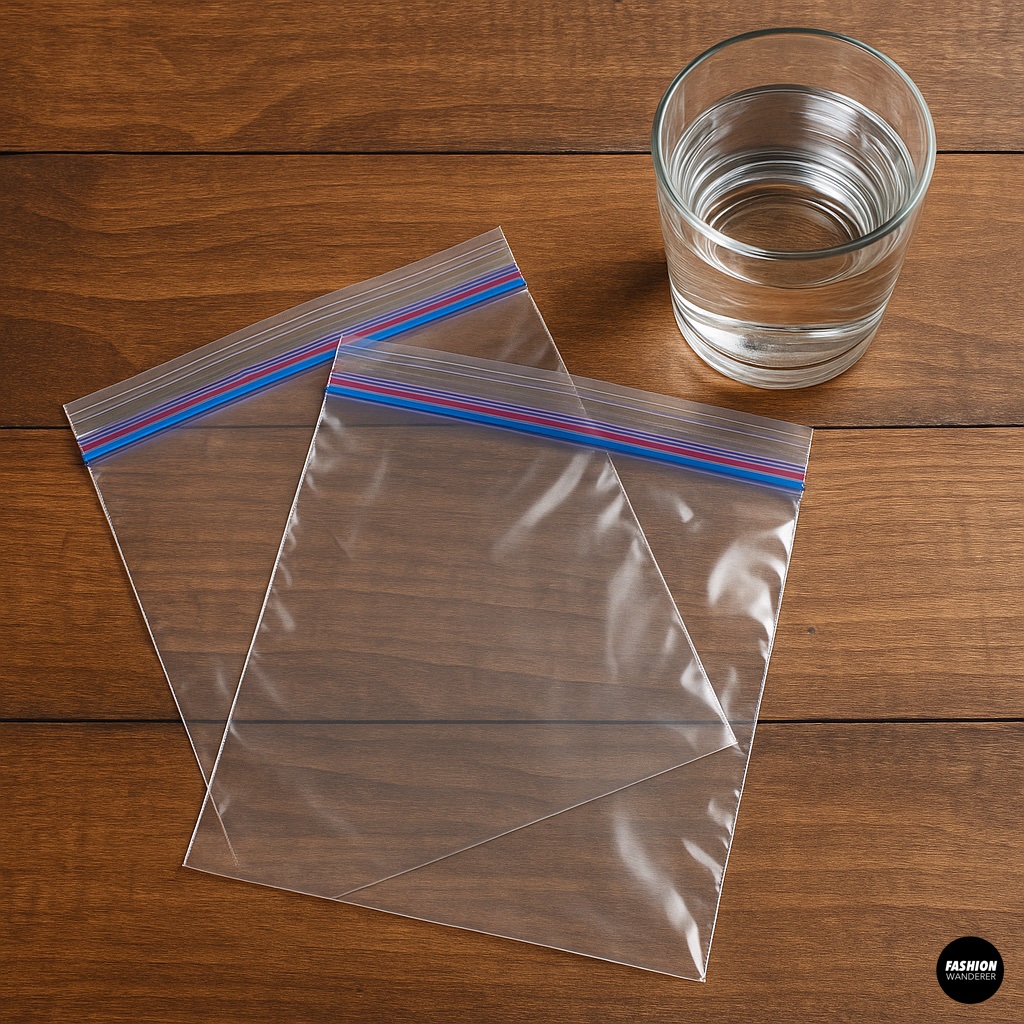
- Two resealable plastic bags
- Water
- Freezer
Step-by-Step Tutorial:
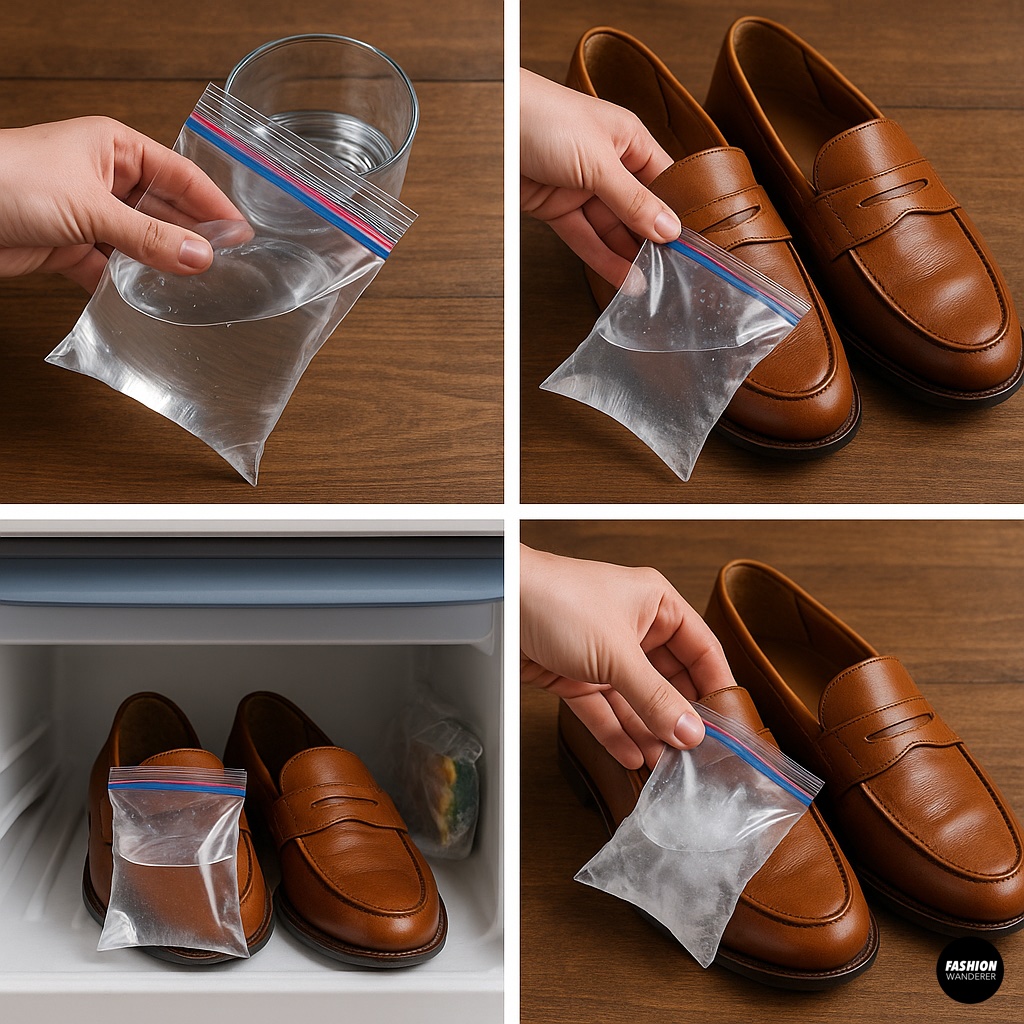
- Fill bags with water: About one-third full. Seal tightly to avoid leaks.
- Insert bags: Place one bag into each shoe, pushing it toward the toe area.
- Freeze overnight: As water turns to ice, it expands and gently stretches the shoe.
- Remove carefully: Take shoes out of the freezer, let the ice thaw for a few minutes, then remove the bags.
Results: Shoes feel roomier, especially in the toe box.
Method 3: Shoe Stretching Spray + Wear
For stubborn materials like suede and patent leather.
What You’ll Need:
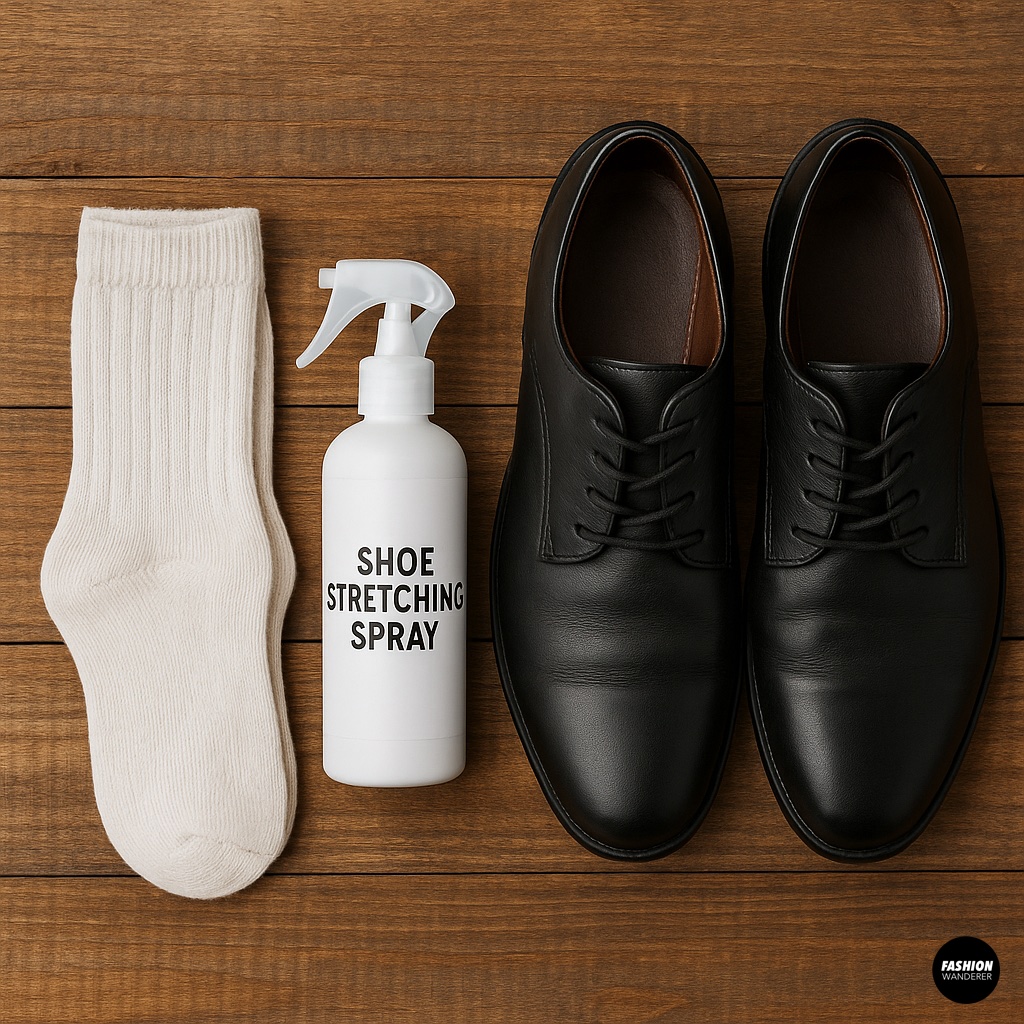
- Commercial shoe stretching spray (available online or at shoe stores)
- Socks and your shoes
Step-by-Step Tutorial:
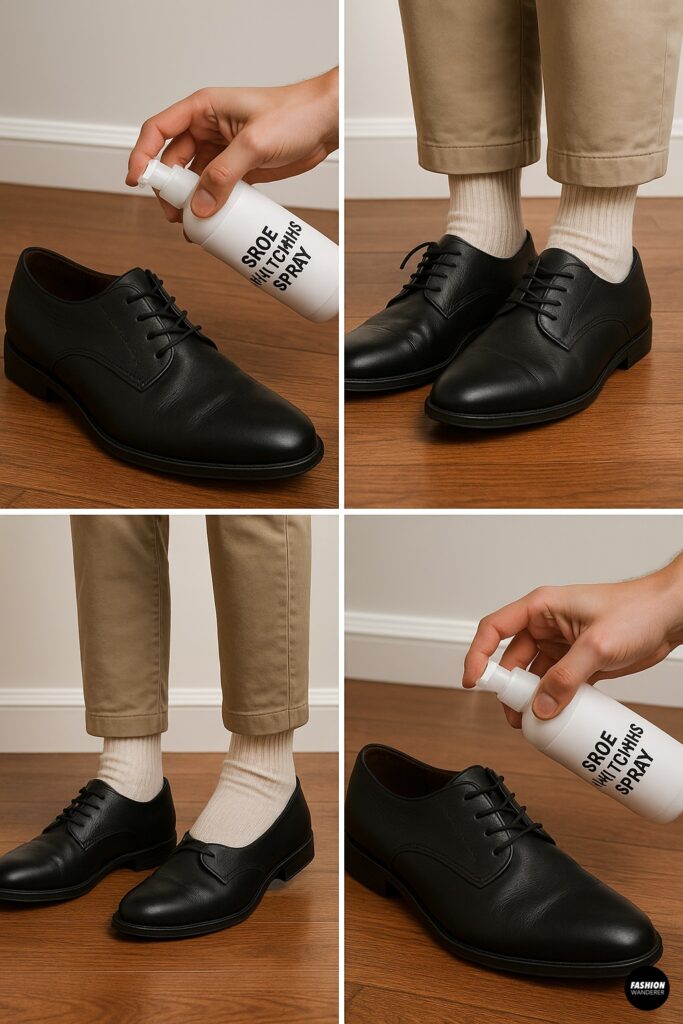
- Spray inside the shoe: Focus on tight areas.
- Wear shoes immediately: Slip them on with socks to help the material expand.
- Walk around: Keep them on for 20–30 minutes while the spray works.
- Repeat if needed: Reapply spray until the fit feels right.
Results: Professional-level stretching without a cobbler.
Method 4: The Potato Hack (Natural Alternative)
Strange but effective for leather or faux leather shoes.
What You’ll Need:
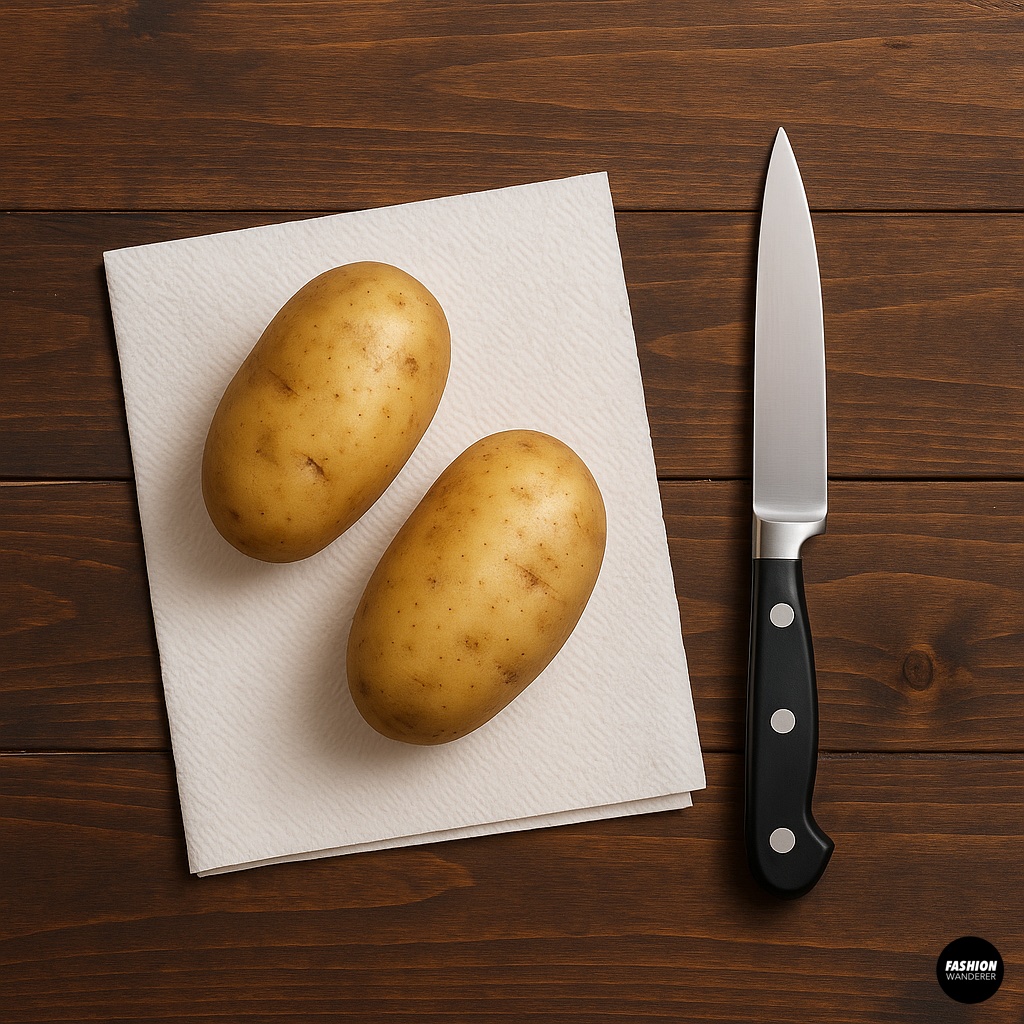
- Two medium potatoes
- Knife
- Paper towels
Step-by-Step Tutorial:
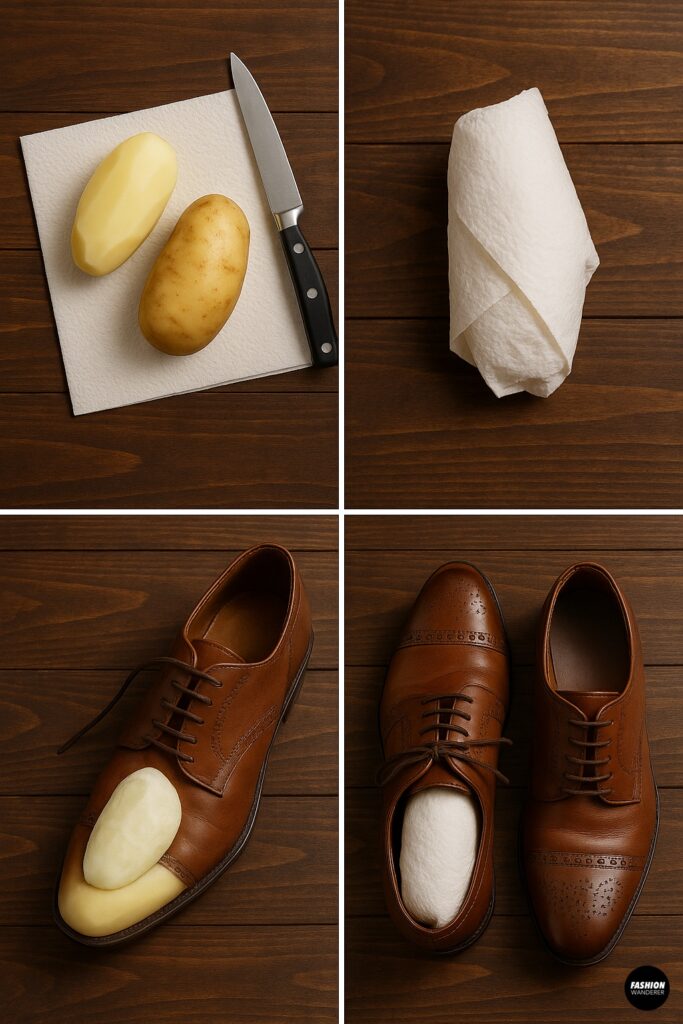
- Peel and shape: Carve each potato to roughly match the shape of your shoe’s toe box.
- Wrap in paper towel: To avoid moisture damage.
- Insert into shoes: Push deep into the toe area.
- Leave overnight: The potato acts as a natural shoe stretcher.
Results: Subtle, natural stretch overnight.
Method 5: DIY Shoe Stretcher with Socks
If you don’t own a professional shoe stretcher, stuffed socks can do the trick.
What You’ll Need:
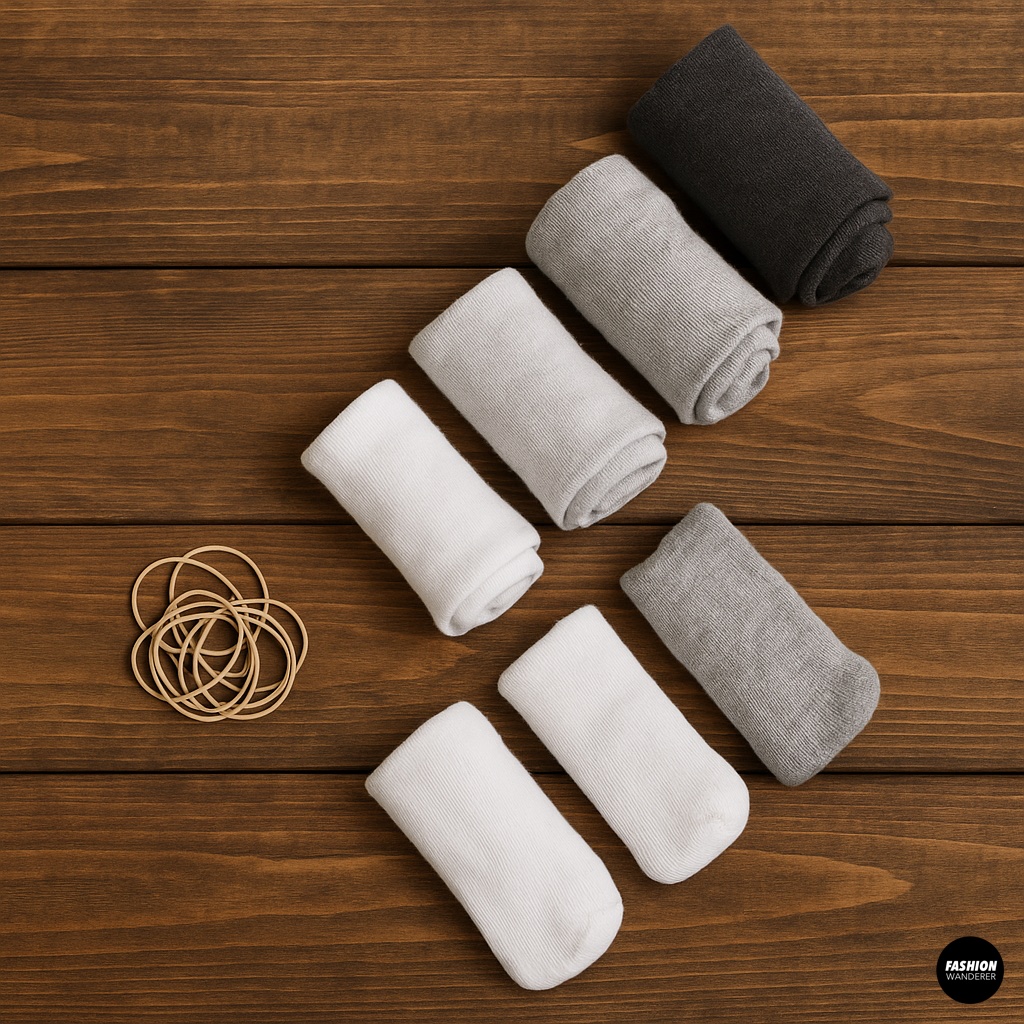
- Several pairs of socks
- Rubber bands
Step-by-Step Tutorial:
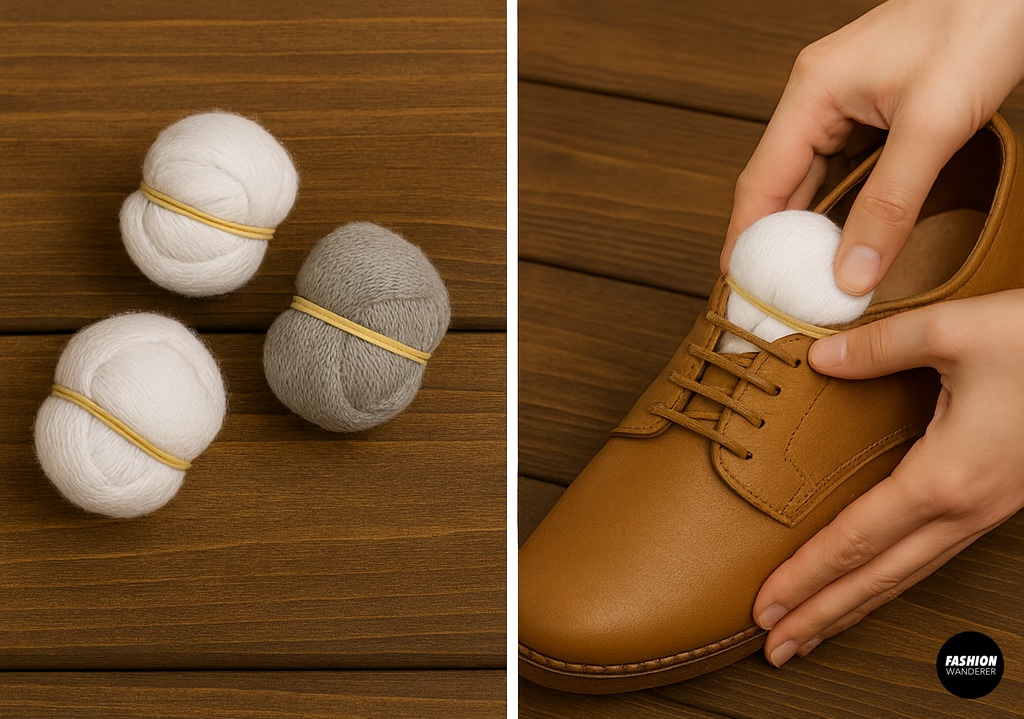
- Roll socks tightly: Create firm balls.
- Stuff into shoes: Push socks into the toe box until snug.
- Secure and leave: Use rubber bands to keep socks compressed inside overnight.
Results: Gradual stretching without wearing them.
Tips for Safe Shoe Stretching
- Test material first: Heat works for leather/synthetic, but avoid high heat on suede.
- Don’t overdo it: Stretch gradually to prevent warping.
- Condition leather: Use leather conditioner after stretching to prevent cracks.
- Repeat if needed: Multiple sessions may be required for very tight shoes.
When to Avoid DIY Methods
- Expensive designer shoes: Safer to visit a cobbler.
- Shoes with delicate embellishments: Sequins, beads, or embroidery can loosen or warp.
- Patent leather: Can crack if overstretched; use spray carefully.
Final Thoughts
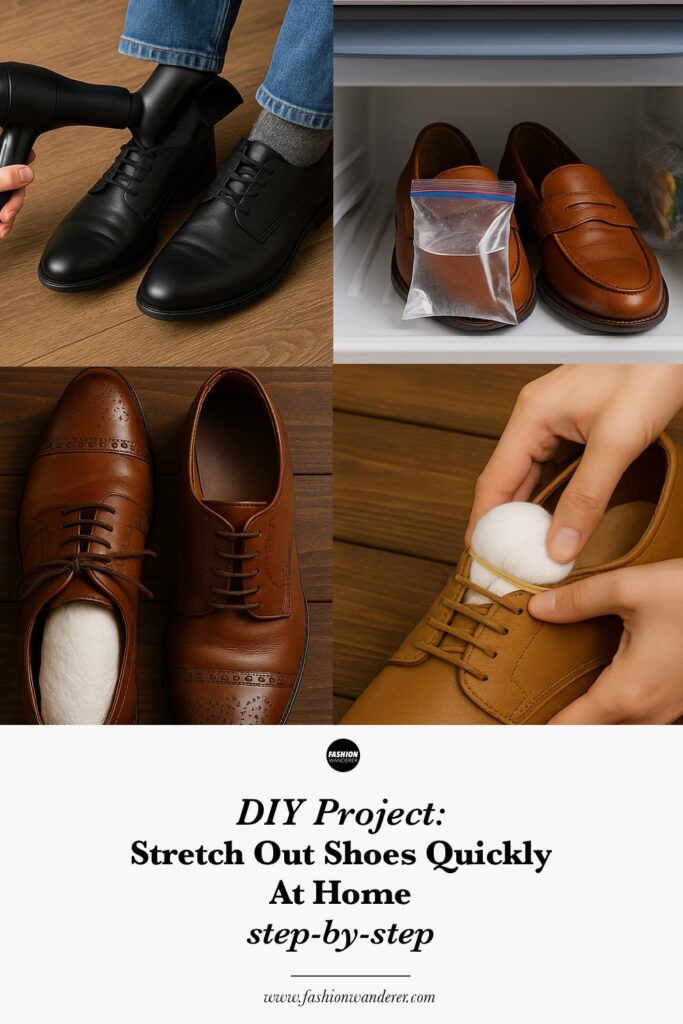
Tight shoes don’t have to mean pain or wasted money. With these easy at-home shoe stretching tutorials, you can quickly loosen stiff spots, prevent blisters, and create a customized fit. From the hairdryer and sock trick to the freezer bag method, these hacks are affordable, effective, and beginner-friendly.
Next time you slip into a too-snug pair, don’t panic—stretch them out and enjoy your shoes in comfort.
Jill
Saturday 29th of August 2026
The images are helpful to give me an idea how to stretch out my shoes.