
Are you ready to refresh your wardrobe for 2025 with trendy, personalized t-shirts that showcase your unique style? T-shirts remain a fashion staple year after year, and 2025 is set to bring exciting new trends that you can easily create at home! Whether you’re an experienced sewer or a beginner, these DIY t-shirt trends combine creativity, style, and sustainability.
In this post, you’ll discover the hottest t-shirt trends for 2025 and detailed step-by-step tutorials to make them yourself. We are talking about next level t-shirt upcycle ideas, let’s dive in!
Why DIY T-Shirts Are Trending in 2025
The rise of sustainable fashion and personal expression continues to fuel DIY clothing projects. Making your own t-shirts:
- Saves money
- Reduces waste
- Gives you total control over your design and fit
- Allows you to experiment with textures, colors, and prints
Plus, DIY fashion is incredibly satisfying and fun!
2025 T-Shirt Trends You Can Make Yourself

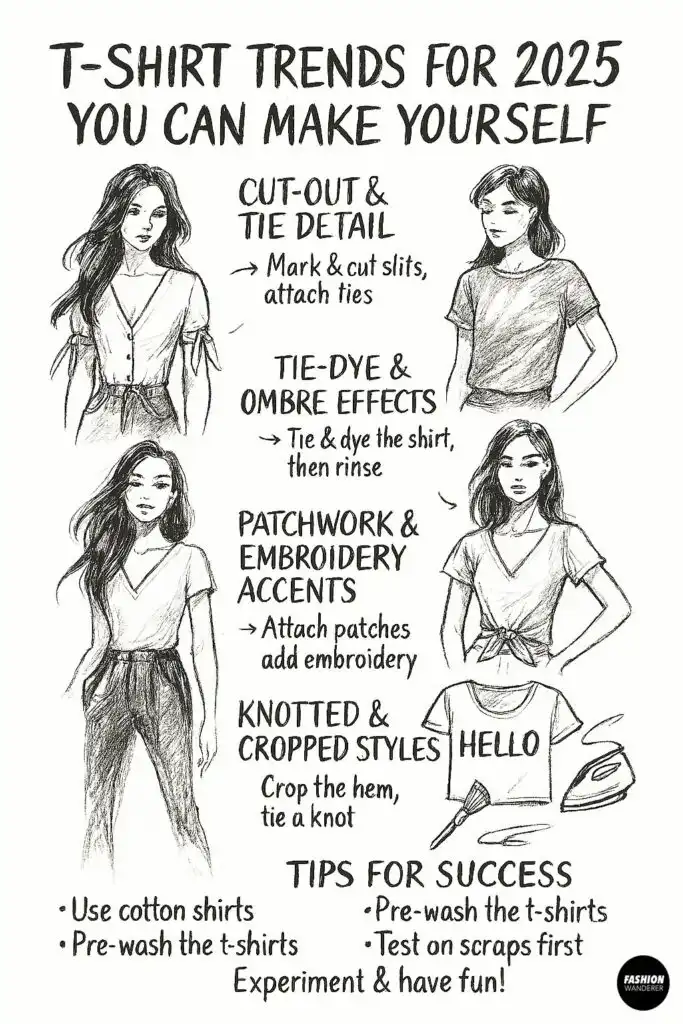
Here are the biggest DIY t-shirt trends of 2025, all of which can be customized easily at home:
1. Cut-Out & Tie Detail T-Shirts
Cut-outs and ties bring a playful and edgy vibe to basic tees. You can use t-shirt cutting ideas to add side slits, neckline cut-outs, or sleeve ties to transform a plain t-shirt.
Materials:

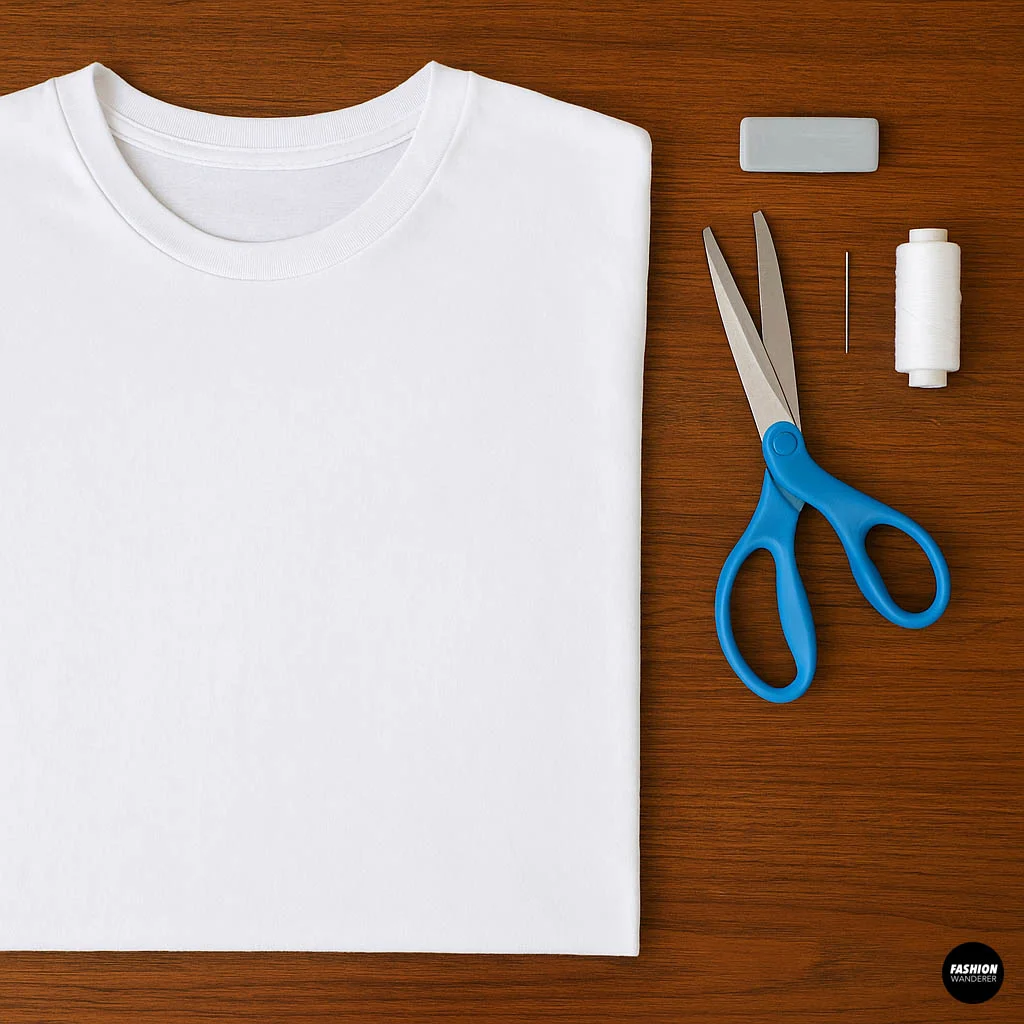
- Basic t-shirt
- Fabric scissors
- Chalk or fabric marker
- Needle and thread or sewing machine (optional)
Steps:

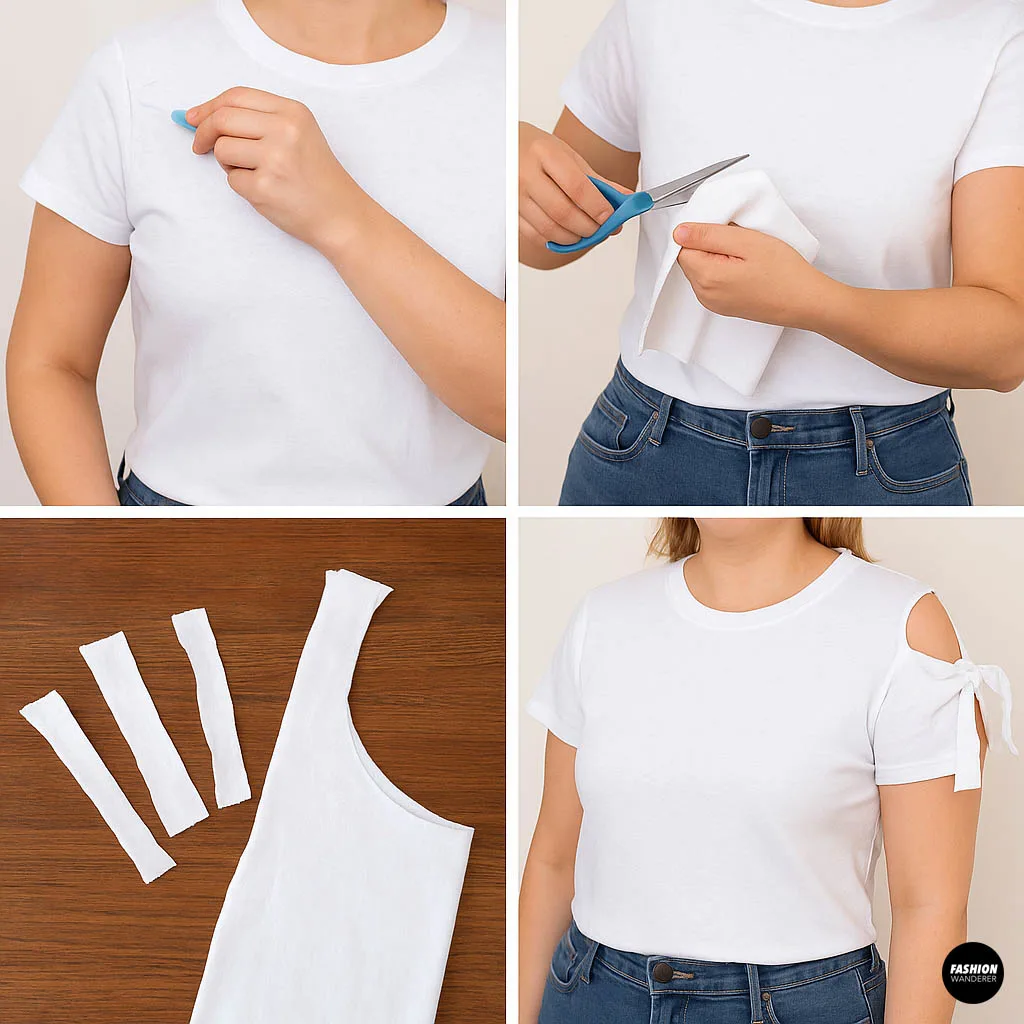
- Mark your design: Use chalk to outline where you want to create cut-outs or slits on your t-shirt. Popular spots are shoulders, sides, or the back neckline.
- Cut carefully: Cut along the chalk lines. For tie details, cut slits about 4-6 inches long.
- Make ties (optional): Cut long strips of fabric from an old t-shirt or matching fabric to use as ties.
- Attach ties: Sew or knot the fabric strips onto the cut slits for a tied-up look. You can also simply knot the t-shirt fabric itself if you prefer a no-sew method.
2. Tie-Dye & Ombre Effects
T-shirt tie-dye is evolving into sophisticated ombre and swirl effects for 2025. Using natural dyes or vibrant colors, you can create a custom shirt with eye-catching gradients.
Materials:

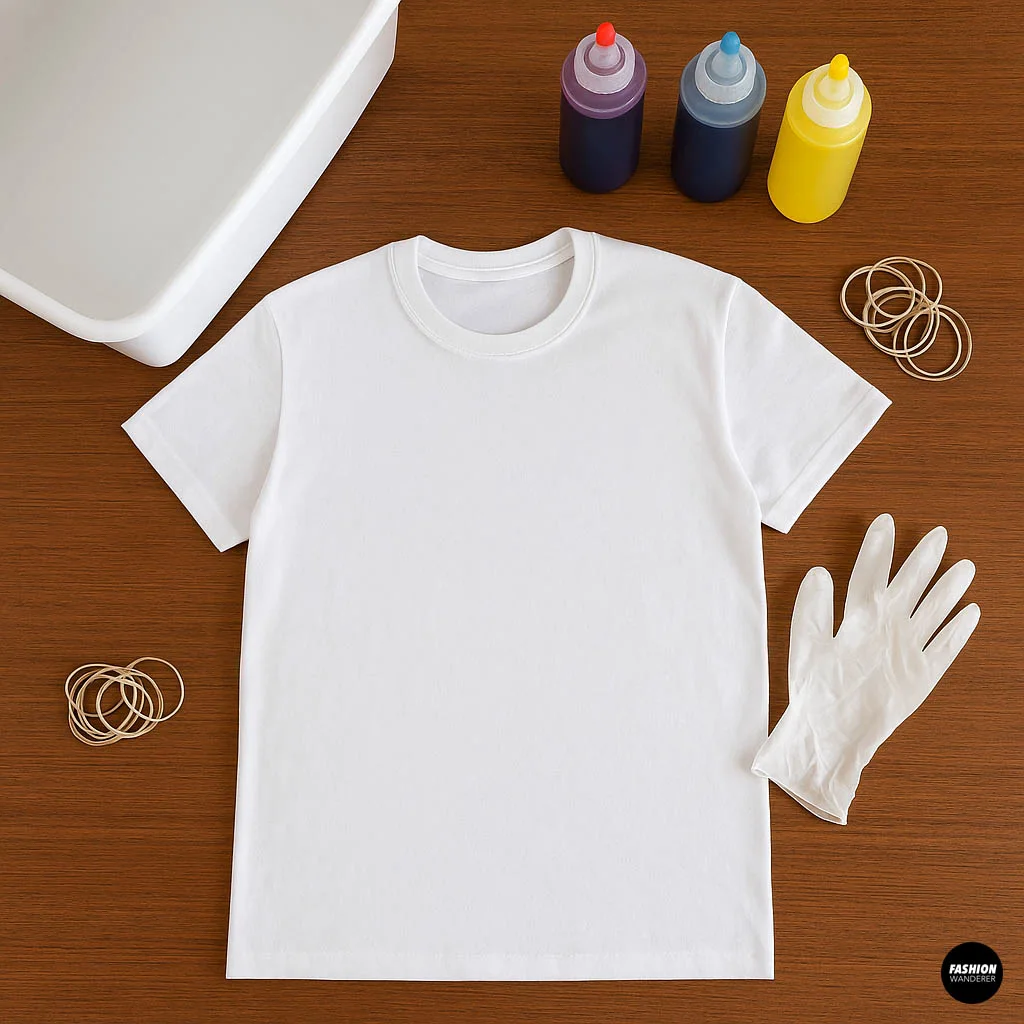
- White or light-colored cotton t-shirt
- Fabric dye (choose your colors)
- Rubber bands
- Plastic gloves
- Plastic squeeze bottles (optional)
- Large plastic bin or sink
Steps:

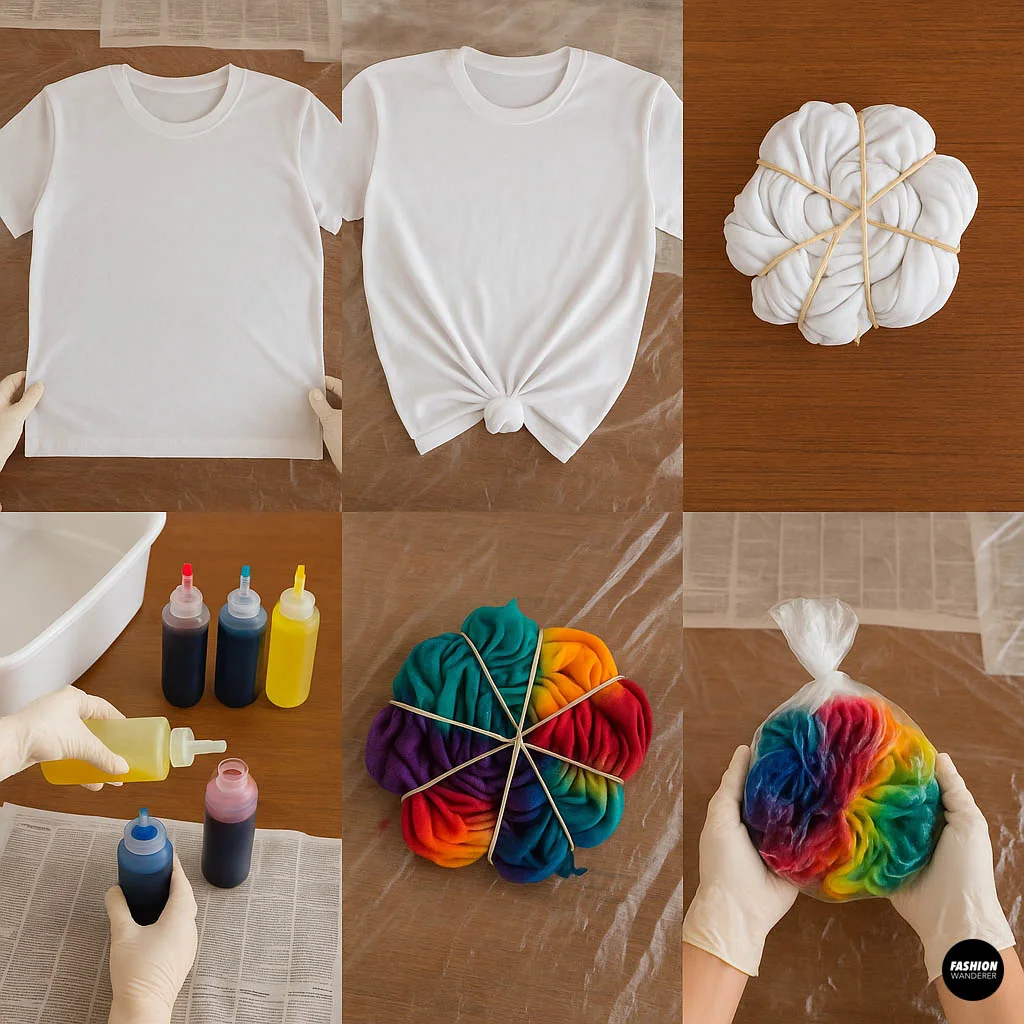
- Prepare your workspace: Cover surfaces with plastic or newspapers. Wear gloves.
- Pre-soak your shirt: Wet the shirt with water and wring out excess moisture.
- Tie the shirt: For classic spiral, pinch the center and twist tightly. Use rubber bands to secure. For ombre, scrunch the bottom half.
- Mix dye: Follow dye instructions, pour into bottles.
- Apply dye: Squeeze dye onto different sections of your shirt.
- Set and rinse: Wrap shirt in plastic and let it sit for 6-8 hours. Rinse under cold water until clear. Wash separately.
3. Patchwork & Embroidery Accents
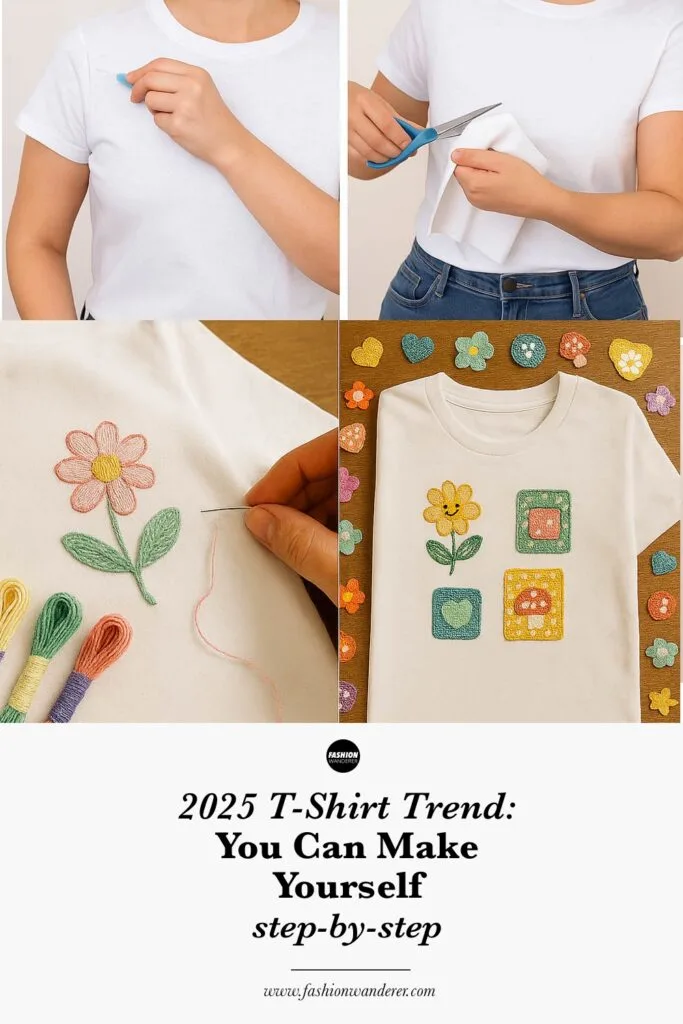
Adding patchwork and embroidery is a chic way to personalize your tees. Floral motifs, geometric shapes, or even words make your t-shirt one-of-a-kind.
Materials:

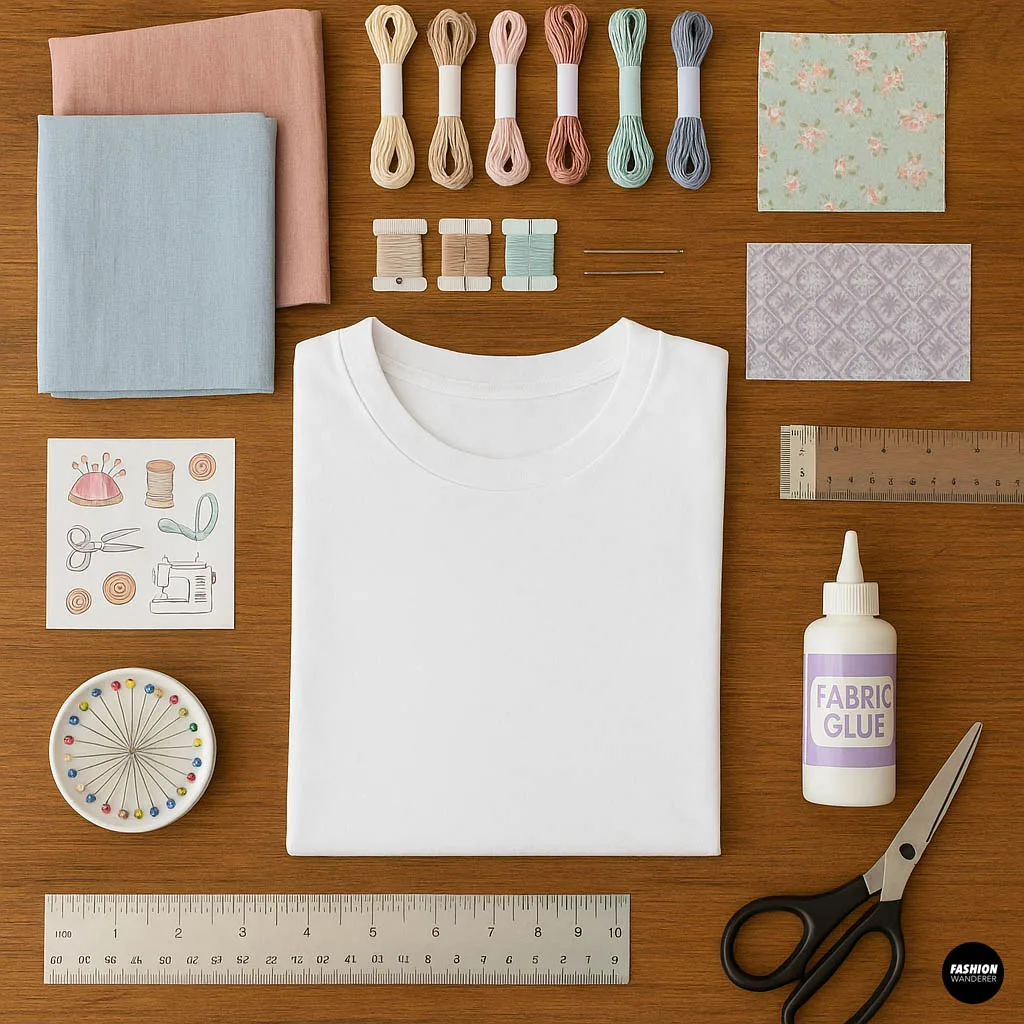
- Basic t-shirt
- Embroidery thread and needles
- Fabric patches or scrap fabric pieces
- Fabric glue or sewing tools
Steps:

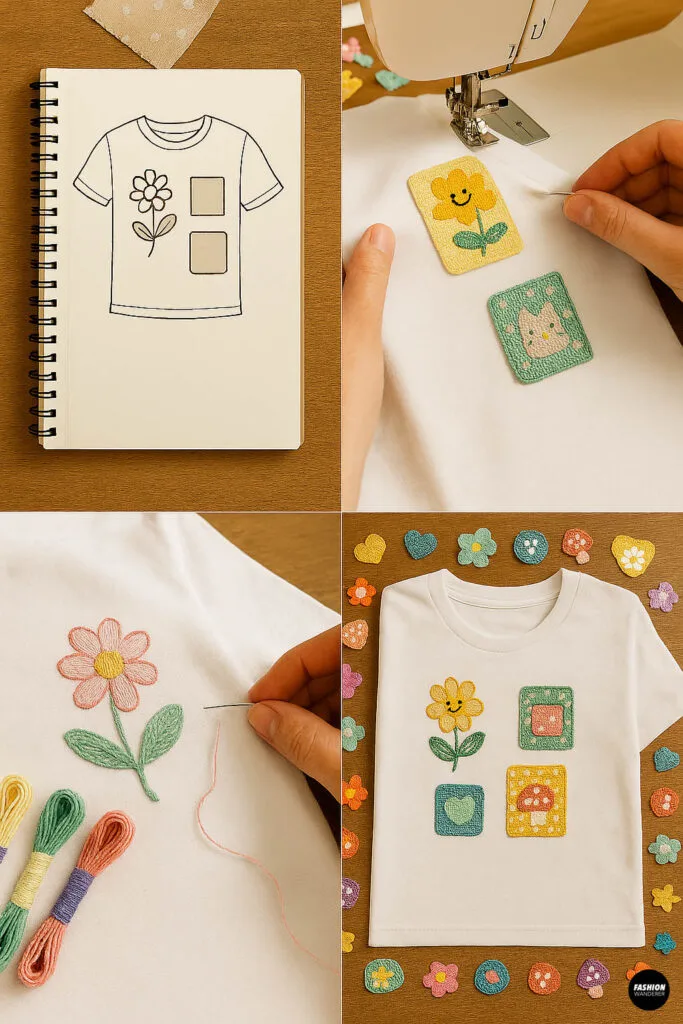
- Plan your design: Sketch where you want patches or embroidery on your shirt.
- Attach patches: Sew or glue patches onto the shirt. For raw edges, use a zig-zag stitch.
- Embroider: Use basic stitches like backstitch or satin stitch to add decorative details around patches or on other parts of the shirt.
4. Knotted & Cropped Styles
Cropped and knotted t-shirts are huge for 2025, especially with puff sleeves or balloon sleeves.
Materials:

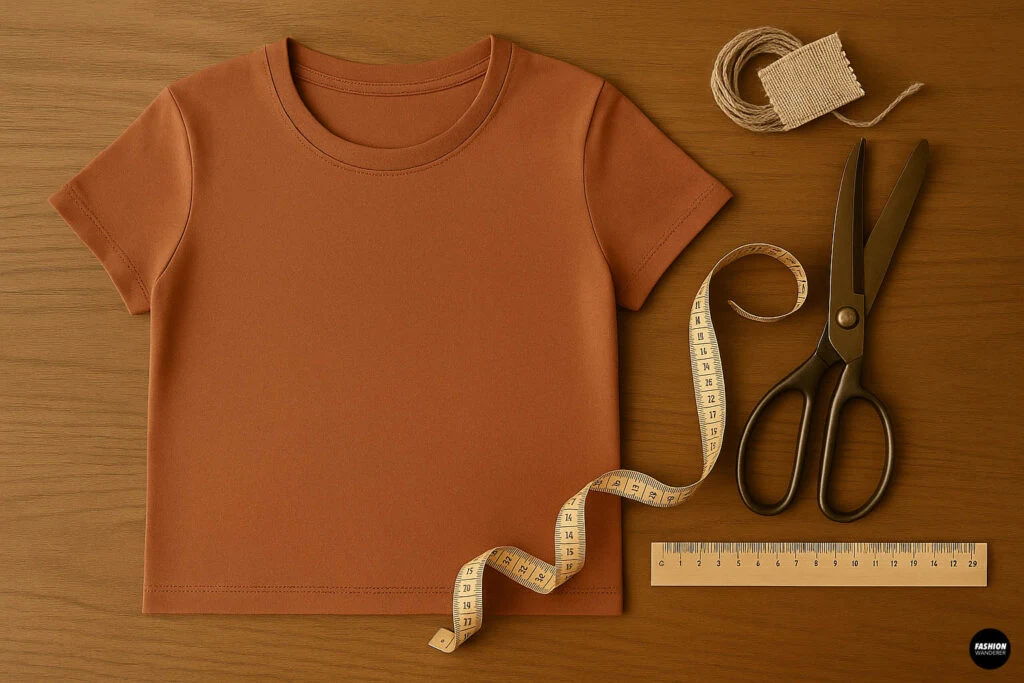
- Basic t-shirt
- Fabric scissors
- Measuring tape or ruler
Steps:

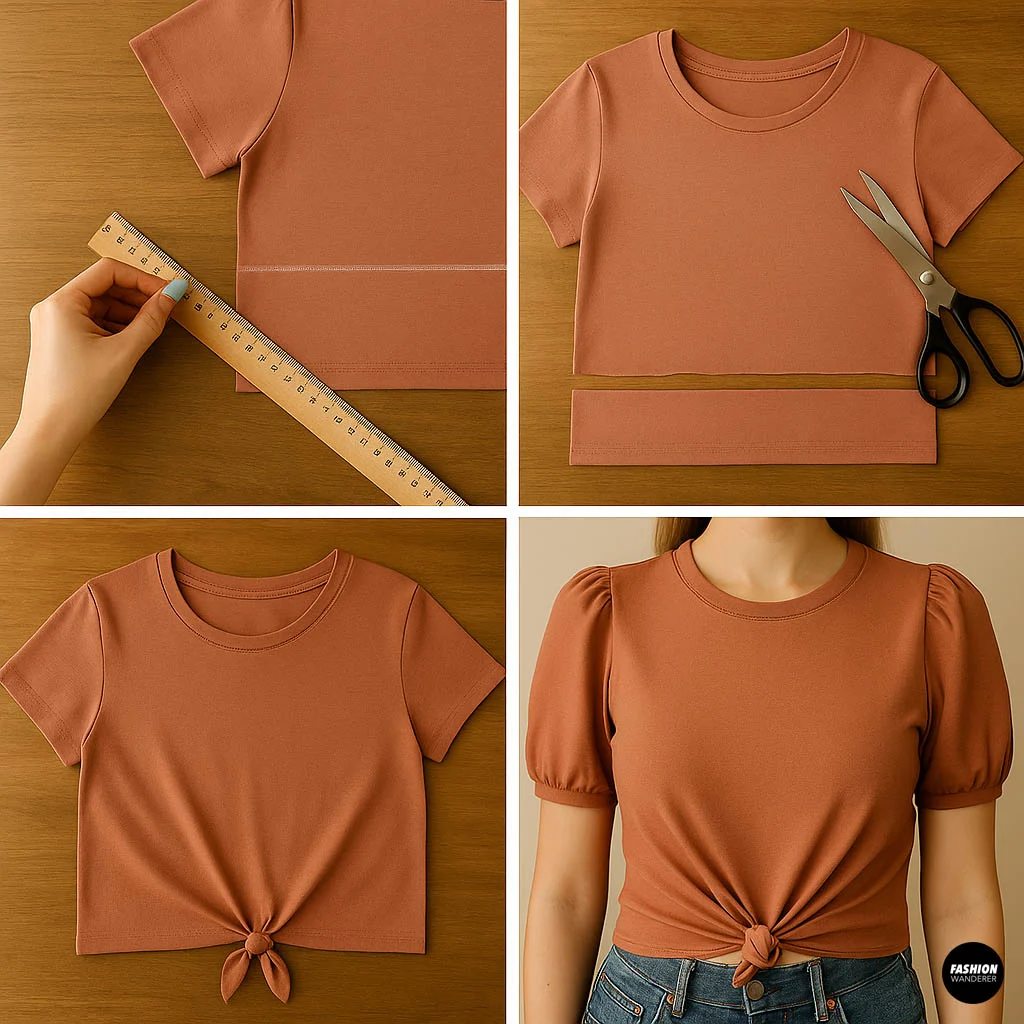
- Decide your crop length: Usually 10-12 inches from the bottom works well. Mark with chalk.
- Cut the hem: Cut straight across your chalk line.
- Create the knot: Twist or fold the bottom hem and tie a knot at the front, side, or back for a flattering cinched effect.
- (Optional) Add sleeves: If you want to DIY puff sleeves, cut extra fabric and sew on with gathers at the top for a trendy puff look.
5. Graphic Transfer & Painting
2025 is all about bold graphics and statement t-shirt painting. Using fabric paints or transfer paper, you can easily apply unique designs.
Materials:

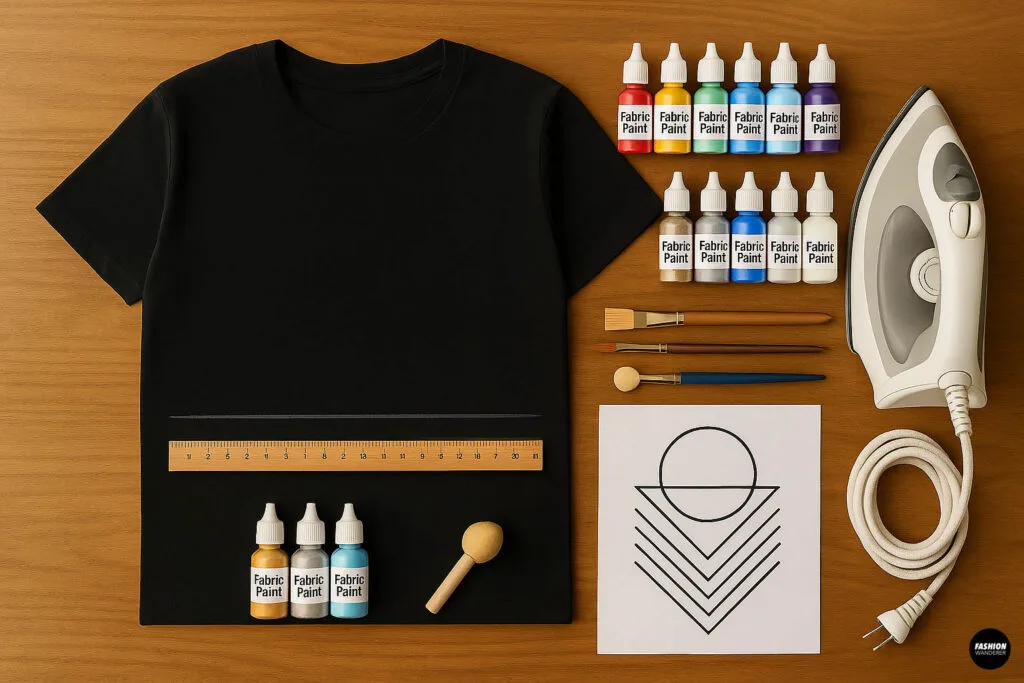
- Plain cotton t-shirt
- Fabric paints or iron-on transfer paper
- Paintbrushes or sponge
- Printed graphic design (for transfers)
- Iron (for transfers)
Steps:

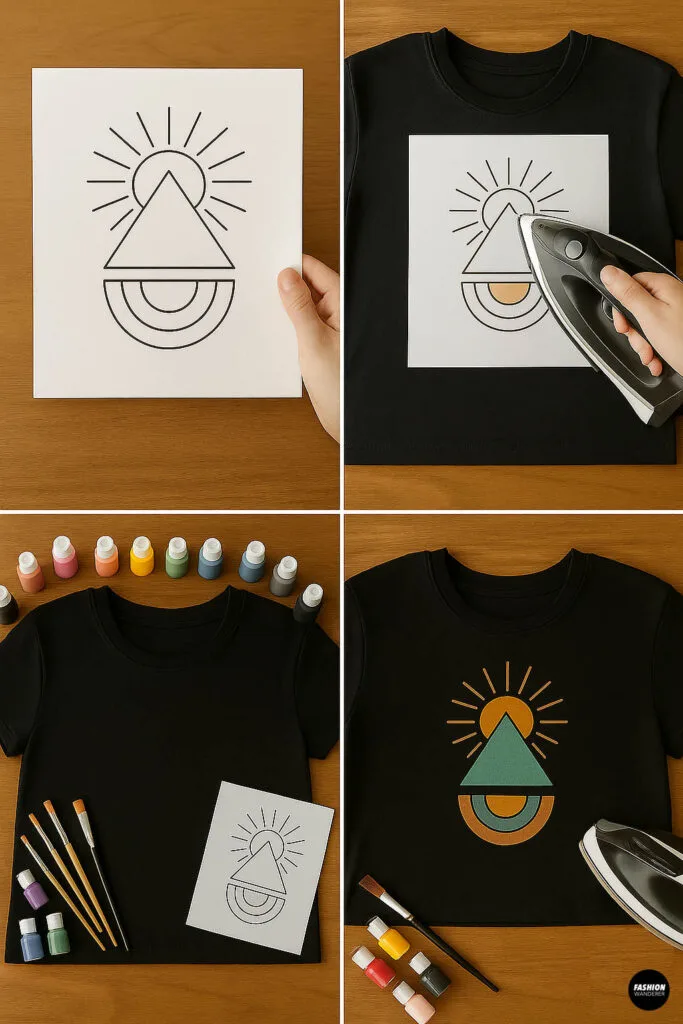
- Prepare your design: Print or draw your graphic on transfer paper.
- Position: Place your t-shirt on a flat surface, put transfer paper where you want the design.
- Iron on: Follow transfer paper instructions carefully.
- Paint option: Sketch your design lightly on the shirt and fill with fabric paint. Let dry completely before wearing or washing.
Tips for Success When Making Your Own T-Shirts
- Use 100% cotton t-shirts for best dye and paint results.
- Pre-wash shirts to avoid shrinkage later.
- Always test techniques on fabric scraps first.
- Follow all safety instructions on dyes and paints.
- Experiment with colors and designs — make it uniquely yours!
Where to Find Materials for DIY T-Shirts
- Fabric stores: For threads, patches, and plain t-shirts.
- Online craft retailers: Huge selections of embroidery kits, dyes, and paints.
- Thrift shops: Great source of affordable t-shirts to upcycle.
- Your own closet: Cut and repurpose old t-shirts or fabric scraps.
Final Thoughts: Start Your DIY T-Shirt Project Today!

T-shirts are more than just basics in 2025 — they’re a canvas for your creativity. Whether it’s a tie-dye experiment, bold cut-outs, or delicate embroidery, making your own t-shirt is a rewarding and sustainable way to stay stylish.
Ready to get started? Pick your favorite trend, gather your materials, and enjoy crafting your perfect 2025 t-shirt. Share your creations on social media to inspire others, and embrace the DIY fashion movement!